
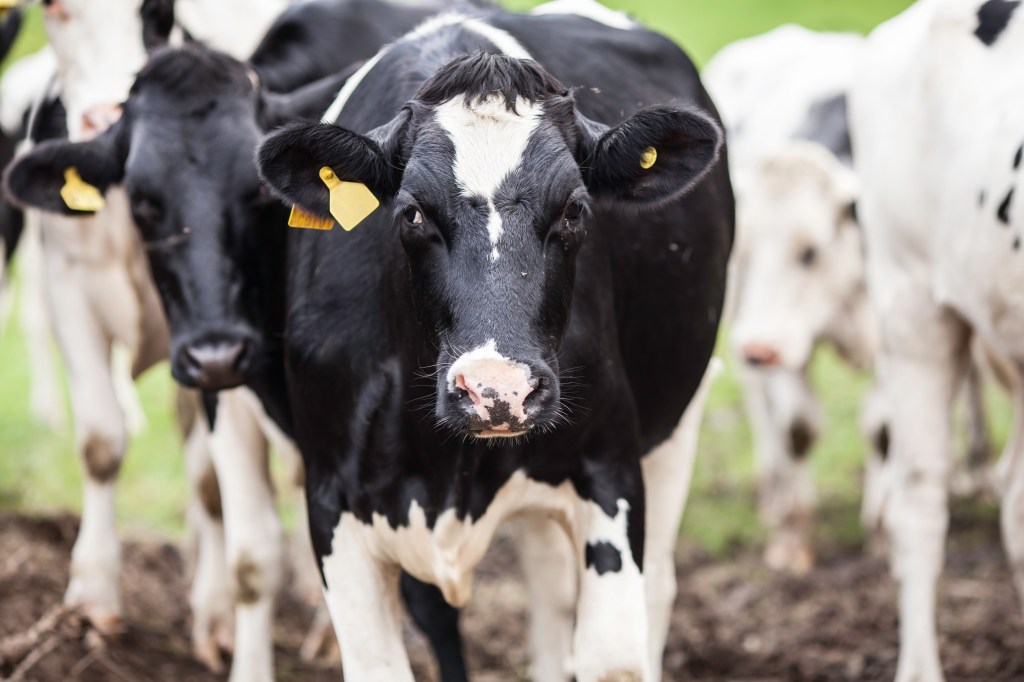
When people hear me say that my wife and I live upcountry on a farm, the next question, often, is “Do you keep cows?” and I answer, “Yes.” Per script, they go: “And how many litres of milk do your cows (all or each) produce?”
Of course, there is no straight answer to that question. In general, the person asking usually has in mind at least four myths about dairy farming, so here goes my take on a few:
1. “Keeping” a cow has little to do with literal keeping….
There is no such thing as “keeping” a dairy cow. Keeping implies a passive occupation, like storing grain or a bar of gold. Far from such luxury, however, a dairy farmer’s daily routine consists of a packed schedule of back-breaking labour: feeding the cows (a lactating Holstein freisian eats as much 25 kg of dry matter each day); milking at least twice a day; cleaning the sheds; managing sourcing of fodder. It is also a highly scientific programme, ensuring that the feed rations are nutrient-balanced with vitamins, minerals and other necessary inputs. And we have not even started talking about attending to health-related issues, managing calving, breeding calves and keeping records.
2. A cow that produces x number of liters?
There is no such thing as a cow that produces x number of liters of milk A cow has a lactation period: nine to 10 months of milk production, allowing the cow to rest at least two months before a new calf is born. Through the lactation period milk production is constantly reducing. A cow with a peak production (usually 4th week after birth) of 30 litres of milk per day will gradually reduce output to as low as 4 or 5 litres, typically by the 44th week. Another parameter: heifers produce less milk in their first calving than more mature mothers, (a basis for hope for a good dairy farmer; a test of patience for the instant entrepreneur).
3. e-Dairy farming? Nah!
You cannot do dairy farming remotely. The other day, my wife illustrated this pointedly to me when, in the middle of the night, she woke me up to pronounce alarmingly: “Susan is coughing.” Susan is one of our cows. The following morning, Margaret walked over to the shed and, after observing Susan for some time, asked the caretaker, “Have you noticed anything wrong with Susan?” He had not. But by end of that day, the systems were full-blown, and a vet had been called to attend to Susan. On another day, I was making a casual walk around the feeding troughs of my small herd and observed that the drinking troughs were turning greed (algae). Cause: lack of thoroughness in cleaning. Neglected for long, that could be a source of disease. The moral: There are things that you (the owner) can hear, observe, attend to better than your best workers, unless you have an exceptional team of attendants. Exceptional staff don’t come easily.
Now that we are at it, we might as well list what should constitute your daily/weekly inspection routine in a dairy farm:
• Overall cleanliness of the facility and milking equipment.
• Animal behaviour: as an indicator of when cows are on heat; and whether they are sick or injured.
• The health of the animals: Timely identification of sick or injured cattle is the key to minimising treatment expenses and loss of the lives of animals. Temperature checks, an animal’s mood, feeding behaviours, are all indicators that can only be identified through observation. I guess with robots and automated systems you could replace all of these with a virtual presence, but that is not the level of dairy operations that one comes across often!
4. Immediate or easy money?
In this day of “instant” everything, including betting, the expectation of most investors is also instant returns. Well, tell them to keep off dairy farming. First, cows produce milk only after they have given birth – and a cow’s pregnancy (gestation length) lasts anywhere between 279 to 287 days. Second, dairy farming requires massive investment: in infrastructure; in growing the herd; in improving the pedigree. Lastly, sourcing of feed and ensuring feed availability and nutrients balance is in itself a time-consuming pursuit.
But I think it is important to close on a positive note: dairy farming is fun; a business that makes you an active participant in life and death issues! In addition to giving you milk and calves and manure, cows also produce (methane) gas that you can abstract and cook with. Cows get to know you, and love you. They get moody and restless, and even reward you with more milk if you play them good music. If your interest is in a truly interactive business, therefore, it is in order to think dairy!
,
 Haron Wachira