
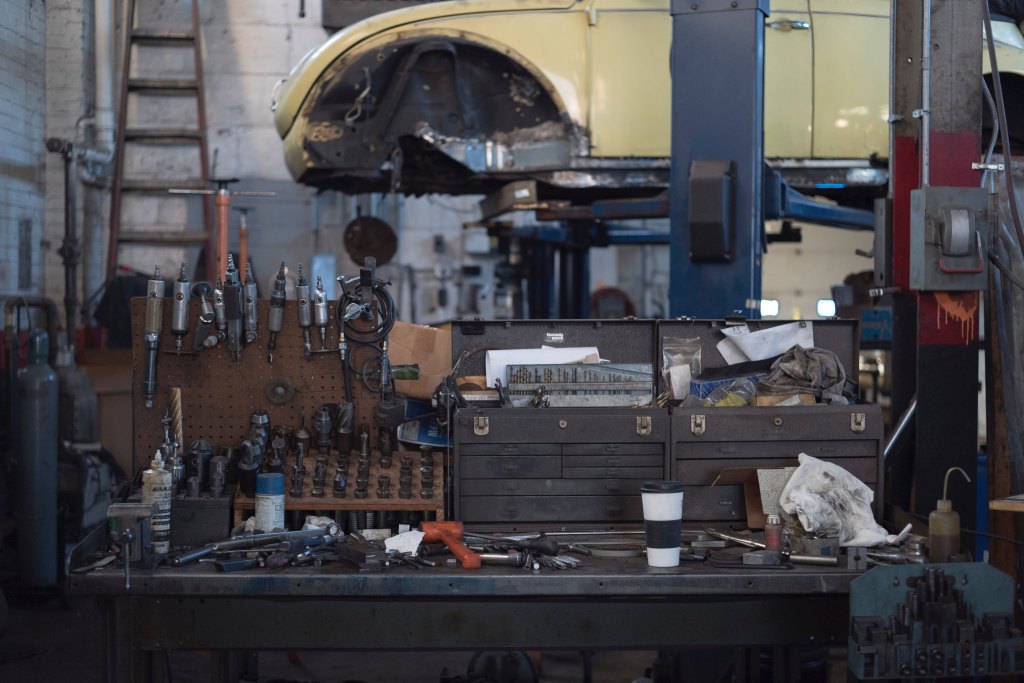
At another visit to an auto garage (old cars!) recently, I chatted with Mwangi (not his real name), a successful man in his early 40s, but from a poor family.) He dropped out of formal schooling in form one due to lack of school fees.
Mwangi apprised me with the details about himself by way of introduction because, apparently, my late father had paid the school fees that enabled Mwangi to get into secondary school (It was nice hearing this good side about my dad!)
Fast-forward to our appointment at the garage: The high school drop-out drove a nice van, was polite and eloquent when he talked and was well-dressed.
“So why the Probox as your vehicle of choice?” I asked casually.
Mwangi explained that he uses the van to transport meat to his three butcheries. Three butcheries! The Probox is more convenient than a pick-up truck because, once he has delivered the meat-box, he can use the car for more prestigious purposes, like for personal transport.
“Profitable work?” I asked.
“I can’t complain,” he said modestly. “The business educates my children – I have one in university and another in high school.”
“Wow, that’s huge,” I said. I meant it. “If you were running a matatu…”
“I tried,” he interrupted. “Useless work.”
Smart fellow. He had easily figured out something I have spoken about (in vain, mostly) in countless forums, that matatu business does not pay; cannot pay – only the driver and conductors make money, not the owner. (Matatu is a public transport van in Kenya, the “investment” of choice for many middle-class employees, which they entrust to brothers or employed drivers to run, and always end up losing money.
In case you are curious, do the math on a matatu scouting the route between Nairobi’s city centre and Kangemi: Fare = Shs 50 x 13 passengers = 690 to cover 10 km. That breaks down to Shs 69 per km for a vehicle with an AA rating of around Shs 70 per km (MCAs get Shs 109.8 per km for cars with an engine size of 2000 to 3000 cc, according to Sarah Serem, Kenya’s Salaries and Remuneration Commission boss). So who foots the other costs – driver, tout, police tax and theft by employees?)
But back to Mwangi: Curious, as casually as I could “converse” without appearing too nosy, I probed him about his business model.
He leases coffee trees for, say, a five year period, and secures himself with a good agreement. His key to realising profit from coffee farming: improved production, aiming for a minimum of 10 kgs per plant per year. Tick! I know from analysis that you need to harvest at least five kgs of coffee from a plant to cover your inputs and labour cost. Mist small scale farmers get only 2 or three kgs per coffee plant per year.
Then, after each coffee payout, Mwangi invests a lump-sum into a butchery (a new one, or improving an existing one), leaving enough money to fund operations. He controls potential staff theft by weighing the meat that he leaves with each employee, which frees him up to pursue other interests.
Mwangi’s butcheries produce daily cashflow, which he uses to buy bulls for slaughter.
Amazing, I thought, how all successful businesses share general four characteristics: Cashflow; Controls; Savings; Investment…. the keys to growth in business.
“Long-term?”
“I don’t know,” he said, laughing. “Let the kids be done with school…. then I can think. Maybe more coffee. But, definitely, I will buy my own plot of land.” A true Kikuyu.
 Haron Wachira