
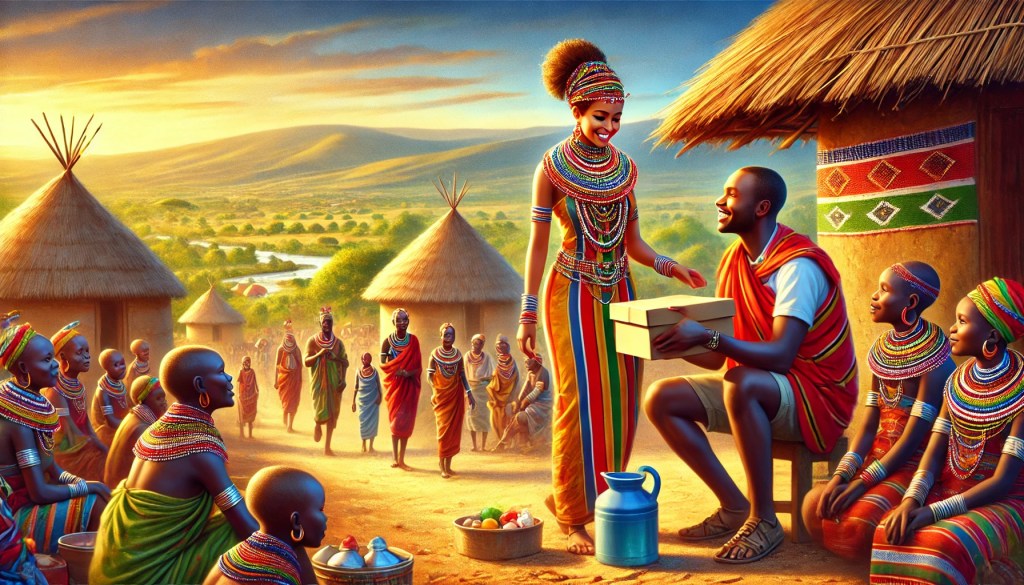
(The third in a fictional sequel that started with “Love Re-ignited” and followed by “A Purpose of Love”)
After completing his tour with the President around the geothermal station, James made his way into the reception hall, an expansive space nestled amidst the rolling geothermal plains of the Rift Valley.
The mid-morning sun bathed the gathering in warm, golden light, reflecting off the surrounding rugged escarpments that framed the horizon. The subtle hum of distant turbines, mixed with the gentle murmur of conversations, created an atmosphere of purpose and camaraderie. Tall banners flapped softly in the breeze, bearing messages of progress and partnerships.
Inside the hall, the smell of freshly brewed coffee mingled with the earthy scent of the valley, grounding the air in quiet optimism.
He navigated through clusters of people deep in animated conversations until his eyes landed on Anders at a corner table, his unruly blonde hair gleaming in the sunlight streaming through the open glass panels. Across from Anders sat a dark-skinned man who radiated quiet dignity. His sharp dark blue suit and warm expression struck a perfect balance between approachability and authority.
“Here, James!” Anders called out, his voice cutting through the buzz. He gestured at an empty seat. “I saved this for you. Come meet someone important.” He paused dramatically before turning to the man beside him. “This is Dr. Jeremy Ojieko, Nigerian by birth, but,” Anders smiled, his hand lifting to gesture with flair, “deep down in his heart a citizen of this country. Jeremy is the Head of the United Nations Development Programme in Kenya.”
Jeremy stood and extended his hand with a smile so warm that James felt instantly at ease. “Ah, James, it’s a pleasure to meet you,” he said, clasping James’ hand with a firm, reassuring grip. “Anders has been telling me about your incredible work in Pokot.”
“Nice to meet you, Dr. Ojieko,” James replied, feeling the heat rise in his cheeks.
“Oh, no, just Jeremy, please,” he insisted, his voice rich with warmth.
As James sat down, Anders seamlessly wove him into the ongoing conversation, recounting the story of how James had led the successful recovery of stolen livestock in Pokot with the help of drones and a helicopter.
“That’s a remarkable achievement,” Jeremy said with genuine admiration, leaning forward.
James shook his head slightly, deflecting the praise. “I couldn’t have done it without Anders. The technology made all the difference.”
“But without you there on the ground…” Anders began, but Jeremy interjected with a laugh.
“Let’s call it a mutual partnership,” he said smoothly. “And perhaps, going forward, we can loop in UNDP into the partnership as well.”
Anders chuckled, leaning back in his chair. “Indeed. Before you joined us, James, I told Jeremy told me that UNDP is open to exploring a peace mission in the Pokot area.”
James’ brow furrowed as he leaned in slightly. “How could that play out?” he asked, his mind already swirling with possibilities. He thought of Arnold’s work among the herds and Prisca’s quiet heroism at the clinic, tirelessly serving Pokot and Turkana women. But how could UNDP fit into the equation? Could we build on these foundations to realise something greater?
“We can discuss the specifics,” Jeremy said. “But I understand you’ve been shouldering significant costs personally.”
James hesitated for a moment, his mind flickering to Prisca. “There’s someone else who deserves the spotlight,” he said finally, his voice quiet but steady. “A young woman—Prisca. She’s doing incredible work at a mission clinic, helping women from both the Pokot and Turkana communities.”
Jeremy nodded thoughtfully. “We’d be very interested in gaining a better understanding of her work. Perhaps we could consider supporting peace and reconciliation initiatives, alongside what she is doing.”
James felt his chest tighten, the conversation suddenly becoming deeply personal. He thought back to the moment Prisca had asked him to consider working in Pokot, her eyes shining with determination. He had hesitated then, unsure how he could manage such a shift from his structured life in Nairobi; and how he could fund himself there. Yet here he was, seeing the hand of God unfold in ways he never could have imagined.
Jeremy glanced at his watch and stood. “Unfortunately, I need to run,” he said, adjusting the lapels of his jacket. Turning to Anders, he added, “But tell you what—could you and James send me a one-pager? A brief concept note outlining the situation, what needs to be done; a rough two-year budget?”
Anders rose, extending his hand. “We’ll get it to you. Thank you for your time, Jeremy.”
James stood as well, his heart still racing. “Thank you so much for considering this,” he said, extending his hand. “Dr… ah….”
Jeremy smiled and shook his hand warmly. “It’s Jeremy… I look forward to hearing more about the amazing work you’re doing.”
As Jeremy walked away, James turned to Anders, his voice tinged with disbelief. “Did that really just happen?”
“Hopefully” Anders responded, crossing his fingers, then quickly changed the subject. “Now, let’s get something to eat. He motioned toward the elegant buffet area.
The long table, draped in crisp white linens, gleamed under the warm glow of overhead chandeliers. Silver chafing dishes, their polished surfaces reflecting the light, showcased vibrant salads, freshly carved meats, and elegantly arranged desserts.
Most of the guests had already served themselves and were now huddled around tables in small clusters, engaged in lively conversation while balancing their plates and eating at the same time.
***
When he got to his apartment in Lavington later that evening, James felt a deep ache of loneliness, like a chasm he couldn’t bridge. The conversation with Jeremy and Anders had been exciting, hopeful even. The resources they’d discussed could transform the work in Pokot, especially Prisca’s clinic. But here he was, alone in a quiet, empty apartment, with nothing but his thoughts for company.
The thought of Prisca pulled at him like a magnet. She was fragile, pregnant — carrying the weight of a baby inside her and the weight of a community on her shoulders. He had already accepted the idea of stepping in as a father figure to the child she carried—Arnold’s child. He had loved her before Arnold came into the picture, he liked to believe. And he was sure she knew it. But did she love him? She needed him, no doubt. But love? The question gnawed at him; its weight almost unbearable. At last, unable to stand the silence, he picked up his phone and called her.
“Hi, James,” she answered, her tone warm but exhausted.
“Hello, Prisca,” he said, his voice steady despite the turmoil in his chest. “How are you doing?” He heard the lowing of cattle in her background, and birds chirping happily. “I can hear you are outside.”
“I am, yes. Glowing in the glory of the honour you earned me by recovering the livestock.”
“Ah, that, he said happily… don’t think too much about it. How are you….? You, Prisca.”
“I’m fine, James, thanks,” she replied, but he could hear the weariness beneath the words. “How about you? Did Anders get you back to Nairobi in one piece after the helicopter drama?”
His heart screamed, I am alone, in my lonely apartment. Audibly, he said “I’m home now, just settling in after a busy afternoon.” He smiled, remembering the door Anders had opened for him at UNDP. “Anders actually came for more than bringing the helicopter.”
“What do you mean?” she asked, curiosity creeping into her voice.
“What’s the one thing that would revolutionize your impact if resources weren’t an issue?”
Prisca let out a soft laugh. “You mean like a theatre? A big, fancy one like the ones in Tenwek or Kijabe Mission Hospital?”
James chuckled. “Sure, why not? Think big. Just tell me.”
She paused, then her tone turned serious. “Honestly, James, a theatre would be great, but I’m not in that league. If someone’s offering, we need basics: bandages, antiseptics, proper cleaning agents. We could use solar panels for the clinic because the generator breaks down constantly. A proper maternity bed, an oxygen cylinder, a stock of painkillers and antibiotics—things like that. The kind of things you don’t think about until you don’t have them.”
She was so eloquent! She thinks deeply and long about these needs, James realised, struggling to keep up with jotting down the list. But her voice weaved an image of the clinic in his mind. He could see Prisca navigating the cramped, understocked facility, tirelessly making the most of her currently scarce resources.
“And, maybe,” she added after a moment, “a small waiting area for the women. Somewhere shaded where they can sit instead of standing outside all day.”
“Got it,” James said, his pen racing to keep up.
“James…” Prisca’s voice softened again. “May I ask… who is offering?”
“UNDP,” he said. “Anders introduced me….”
“Aah,” she said. “Them!?”
“Yeah, them,” he said. “You have an experience with them?”
“Well,” she said, “Don’t raise your hopes too high. These big organizations always talk about helping, but most of the time, it’s just conferences and reports. Nothing tangible on the ground.”
“I hope not this time,” James said, his tone firm. “The man I spoke to is the head of UNDP in Kenya. Dr Ojieko. Anders will be on him.”
Prisca let out a soft sigh. “I will pray about it,” she said. She did not sound as excited as James in this proposition.
James smiled. “Please. Let’s.”
The rest of the week, James immersed himself in drafting and redrafting the concept note, perfecting every word. It wasn’t just about the needs in Pokot anymore—each sentence carried his quiet, growing hope of standing by Prisca’s side, as a supporter and… hopefully, something much more.
Then an idea struck him. A wild one. He grabbed his phone and dialled Prisca.
The phone rang. Once. Twice… Longer than usual. Anxiety rattled him. He knew she’d call back once she saw the missed call—rationally, there was no reason to worry. And yet, his heart pounded as if something irreversible was slipping away. He felt like a child holding his breath, wondering whether the lid of a mystery box would ever be lifted.
Finally, the line clicked.
“Sorry, James,” Prisca said, her voice steady, laced with a quiet apology. “I was in the examination room with a patient.”
“Oh, sorry to interrupt. Should I call later?” he asked, trying not to sound too eager.
“No, no, it’s fine. We can talk now,” she assured him.
“Great. I’ll be quick. I need your input for the concept note.”
“Of course. What do you need?” Prisca’s willingness made James smile, though he knew she couldn’t see his expression.
“Remember you mentioned Tenwek Hospital the other day?”
“Yes, I do. It’s a fantastic facility. Donor-funded, well-equipped.”
“How far is it from where you are?”
“Approximately 74 kilometres.”
“You know that off the top of your head?” he teased.
Prisca chuckled. “We take patients there. It’s our main referral hospital.”
“Would you be able to get there soon? I’d like to gather realistic details for the concept note—pictures, interviews, that sort of thing. I’ll cover your costs.”
Prisca hesitated. “The road’s in bad shape, especially around Chebaraa. Recent flooding made some sections impassable.”
James frowned. “That’s unfortunate. How about Nairobi? Could you make it here? We can fly to Tenwek from Wilson Airport.”
Prisca’s voice rose slightly in surprise. “I’ve never been on a plane.”
James couldn’t hide his grin. “Well, there’s always a first time. I could come pick you up?” — that’d be nearly an entire day together on the drive back to Nairobi, and then another day together to Tenwek— just the two of them.
Prisca spoke after a thoughtful pause. “Our missionaries come to Nairobi frequently,” she said, clearly to save him the inconvenience of the long drive to pick her up. “I’ll check to know when someone’s heading there.”
“Please do,” James said, trying to sound businesslike, a bit disappointed. Still, his heart raced at the idea of spending a day with her—on the ground, in the air, and at Tenwek.
When Prisca called back, she confirmed she’d be in Nairobi the next day. James offered to pick her up at her sister’s house in South C, near Wilson Airport, ostensibly to save her from the rain.
The following morning, as she approached his car from her sister’s house, James couldn’t help but notice how her pregnancy had advanced. Her rounded belly now defined her silhouette, subtly arching her back.
She wore a flowing maternity dress, soft blue with delicate white embroidery along the hem and neckline. The loose fabric moved gracefully with her steps, complementing the quiet elegance of the shawl draped over her shoulders, its earthy tones contrasting beautifully with the dress.
Over one arm, she carried a large, well-worn leather bag, its scuffed edges and utilitarian design hinting at its frequent use.
James stepped out of the car to meet her, an open umbrella in hand. Prisca greeted him with a light embrace and a warm smile.
“The rain’s over,” she said. “But thank you for coming prepared.”
He smiled back, folding the umbrella. “Better safe than sorry,” he replied lightly.
“Here, let me help you,” he offered. He reached for her large bag, taking it from her effortlessly before opening the passenger door.
“Thank you,” she replied, settling into the seat with careful grace.
After placing her bag on her lap, James closed the door gently and walked around to the driver’s side.
They drove off, the rough tarmacked road betraying years of neglect. James noticed Prisca’s subtle adjustments—shifting slightly in her seat, her hand occasionally returning to rest on her belly. Sideways, he could see the quiet strain in her posture, the dual weight she carried—not just the life growing within her, but also the relentless burdens of an underserved community.
A wave of admiration and protectiveness swept over him. This was no ordinary woman—resilient, selfless, and unwavering in her mission. He gripped the steering wheel a bit tighter, silently vowing to do whatever he could to lighten her load.
Wilson Airport buzzed with activity as James and Prisca arrived that morning. They moved through the simple security checkpoint. The process was quick but thorough.
The small, bustling airfield had a certain charm, a mix of efficiency and organized chaos. Planes of all shapes and sizes lined the apron, some glinting in the pale sunlight that broke through the overcast sky. Pilots and ground crews darted about, loading cargo in the small planes, guiding propellers, and prepping for take-off. The air smelled faintly of aviation fuel and wet tarmac, the latter a result of the drizzle that had fallen earlier, leaving clean puddles scattered across the tarmac.
Most of the activity centred around hangars, including the one emblazoned with the Mission Aviation Fellowship (MAF) logo, where a line of smaller aircraft stood ready for their next flights.
James glanced at Prisca, who walked quietly beside him, her eyes scanning everything with curiosity. The wind had picked up, carrying a sharp chill that made her pull her shawl tighter around her shoulders. It was her first time at an airport, and the novelty of it all was evident in her intent gaze.
“Is it always this busy?” She asked as they navigated the bustling airstrip.
“Wilson is one of the busiest small airports in Africa,” James explained, gesturing toward the activity around them.
Prisca nodded thoughtfully, taking in the orderly chaos. “It feels…different from what I imagined. Less formal, maybe? But everyone seems so focused.”
James smiled. “That’s the charm of small airports like this. It’s all about efficiency. Most of these flights are short-haul, for humanitarian or private purposes—like ours.”
As they approached their aircraft, a compact white-and-blue four-seater Cessna, Prisca glanced at it with a mix of wonder and apprehension. “Where do we get our tickets?” she asked, her tone genuinely curious.
James chuckled. “This is a different kind of experience. No tickets, no long check-ins. It’s all pre-arranged. Just show up, and you’re ready to go.” He left out the detail of how much the private flight had cost him.
A broad-shouldered man in his mid-forties approached them, his sun-weathered skin hinting at years spent outdoors.
“Good morning!” the captain called out, his voice calm and assured. “I’m Captain Mwendia. Ready to head to Tenwek?”
He wore a crisp white short-sleeved shirt, neatly tucked into dark blue trousers, the fabric pressed but softened by wear. Gold-embroidered badges on his shoulders marked his rank, glinting in the sunlight. His navy cap, adorned with a gold emblem, sat squarely on his head, completing the uniform.
The captain’s sturdy black leather shoes provoked a thought that made James smile—solid, grounded. Ironic, considering the man’s true domain was the sky.
James extended a hand in greeting. “Good morning, Captain. We’re ready. Though I have to say, the weather looks a little ominous.”
Captain Mwendia grinned, a confident twinkle in his eye. “Nothing this bird can’t handle. It’s a bit windy, but we’ll climb above it soon enough.”
Prisca offered a constrained smile, her fingers still tightly gripping her shawl. As they boarded, she cast one last glance at the bustling airstrip, as if engraving in her mind silent geomarkers to guide her back should they ever lose their way.
James helped Prisca climb into her seat, steadying her as she carefully navigated the narrow, unsteady steps of the small Cessna. She gripped the edge of the doorway tightly, each movement carefully measured. Once seated, her hand instinctively found the armrest, clutching it firmly, bracing herself for the unfamiliar experience ahead.
At last, they were both buckled in. The pilot ran through his pre-flight checks, then brought the engine to life with a gentle turn of a small key. It roared awake before settling into a deep, steady hum, drowning out the bustle of the airfield outside.
Prisca glanced at James, her expression a mixture of curiosity and unease.
The take-off was smooth at first, but as the Cessna gained altitude, the wind grew fiercer. The tiny aircraft shuddered as it climbed through dense cumulonimbus clouds, dark and swollen with moisture. The air outside was sharp and cold, and droplets streaked the windows as the plane ascended. Turbulence jolted them in their seats.
Prisca instinctively reached for James’ jacket, the bulging veins under her knuckles betraying her fear. She leaned closer to him, raising her voice to be heard over the roar of the engine. “I didn’t think flying could be this…this wild,” she admitted, her voice trembling.
James placed his hand gently over hers, the touch both natural and protective, to reassure her. But it drew out from her a warmth that spread through him, quickening his heartbeat and whirring his thoughts. It was as if that simple contact were a language in which he heard her communicating the solution to his innermost emotional need. He turned toward her, his gaze offering a calm smile that barely masked the question brewing in his chest: Did she feel the same way?
“It’s just the wind and the size of the plane,” he called out, raising his voice to be heard over the noise. “We’ll be past it soon!”
True to his word, the Cessna eventually broke through the thick cloud cover, emerging into a serene blue sky. Below them, the clouds stretched like a soft, endless carpet. The turbulence eased, and Prisca’s shoulders relaxed. But her hand still clutched the edge of James’ jacket.
“This view is incredible,” she said, her voice soft but loud enough to rise above the engine’s hum. Her eyes stayed fixed on the endless horizon, where the soft blues of the sky met the radiant white of the clouds. “I never thought I’d see the world like this.”
James looked her over, taking in her glowing skin with its telltale sheen of pregnancy, and the wonder etched across her face. “It puts things into perspective, doesn’t it?” he said, a hint of reflection in his tone. “Reminds you how small we are—but also how much work waits for us down there.” He gestured toward the patchwork of land barely visible through the clouds.
Prisca nodded, her expression growing thoughtful as the reality of their mission settled over her again. The awe in her eyes blended with determination, a reflection of the burden she carried—not just her child, but the lives of those she sought to serve.
“Here we are,” Captain Mwendia’s voice crackled through the intercom, snapping them out of their thoughts. “Tenwek airstrip.”
Prisca blinked in surprise. “That fast?”
“Yes, that fast,” James responded with a small smile. “Air travel.”
“The rain last night may have left the airstrip in a bad state,” the pilot said, his words partly muffled by the engine’s roar.
“What do you mean?” James asked, leaning forward to catch the details.
“We’ll first take a look,” Captain Mwendia replied, lowering the plane smoothly toward the ground.
James and Prisca peered out their windows as the airstrip came into view. The small plane swooped down like an eagle in a controlled dive—close enough to just tease the earth. The plane’s shadow skimmed over the uneven ground, flickering across pools of muddy water, fresh cow dung, and rain-flattened grass. Then, just as swiftly as it had come down it pulled upwards. In an instant, the scene below blurred and rushed backward, unravelling like a film reel in reverse.
“Wow! So, what now?” James asked, trying to mask the anxiety and wonder of the brief experience.
“We’ll land. It looks manageable.”
Prisca’s wide eyes flicked to James, then closed tightly, her fear now visibly pronounced. This brave woman, who stood strong amid the dangers in Pokot country, now looked uncharacteristically vulnerable. James wanted to reach out, to say something reassuring, but he stayed still, knowing his words would pale against her fear.
The plane descended again, swaying slightly despite the captain’s firm grip on the controls. The wind hissed through the edges of the extended landing flaps, straining as the aircraft fought for balance.
Her face tense and drawn, Prisca, hesitated before slowly opening her eyes. James’s hand rested lightly on hers, offering reassurance, though not completely steady himself. Her other hand, gripping the armrest tightly, gave her away.
With a final shudder, the wheels touched the wet ground, meeting it with a jolting splash that sent a spray of water and mud outward. The first puddle sent a wave of muddy water across the windshield, obscuring their view for a moment. The plane wobbled, skidding slightly as Captain Mwendia expertly held it steady, his hands firm.
The engine growled in diminishing protest as the plane gradually came to a halt. The sudden silence that followed felt almost deafening. Both James and Prisca exhaled deeply, their relief palpable. James turned to her, catching the faint, almost hesitant smile that flickered across her lips. Despite the fear, the turbulence, and the jolts, she had made it.
As they stepped out onto the damp airstrip, the fresh, earthy scent of rain-soaked grass dominated the air. The clouds hung low over the lush hills, mist rolling in from the distant valleys. James inhaled deeply, letting the crisp air clear his mind. This trip was no longer just about a concept note or a funding proposal—it was about Prisca. Her resilience. Her mission. And the growing certainty stirring within him that, somehow, he wanted to be part of it all.
Before leaving Nairobi, Prisca had called Tenwek to plan for their visit. Her attention to detail was evident the moment they arrived. A tall, commanding woman with a kind smile was already waiting for them at the entrance.
“Welcome, Prisca, and James?” Matron Janice Otieno greeted him warmly, shaking his hand with a firm grip.
“Matron Janice and I go way back,” Prisca said with a smile, her familiarity with the woman evident.
“Good to have you here,” Janice said. “We’re excited to show you around.”
She handed them both lightweight coats with strings for buttoning—standard visitor attire for touring the hospital facilities.
Prisca turned to James with a teasing smile. “My turn to help you ‘buckle up.’” She fastened the strings deftly, her fingers working quickly. James smirked, remembering how different things had been just hours ago—Prisca clutching his jacket during the turbulent flight, eyes tightly shut against the view outside. Now, on solid ground, she was back in her element—composed, articulate, completely at ease.
From outside, James took in the first striking feature of the hospital grounds—a large generator humming steadily, its rhythmic drone the only sound cutting through the quiet rural landscape.
“That’s a 100-kilowatt generator,” Janice explained, leading them toward it. “It’s running right now. Imagine how disrupted by power outages without it.”
James quickly jotted down in his notebook: A 10 kW genset – Essential.
The tour proper began in the operating theatres, where Janice explained the basics of their setup. The rooms were simple but functional, with aging surgical lights and basic sterilization equipment.
“We handle minor surgeries and emergencies here,” she said. “For advanced diagnostics, we refer patients to Kijabe or Nairobi.”
James noted: Basic surgery room? He would think that through later, in consultation with Prisca.
Next, Janice led them to the boiler room, where a large cylindrical boiler hummed softly.
“This boiler supplies hot water for the wards and sterilizes our instruments,” she explained. “It’s old, but it still works—most days.”
➡ Water heating: Crucial for sterilization & patient care.
They continued through the general wards, passing neatly arranged beds occupied by a few patients.
“Wow, no odor at all,” James remarked, thinking of the stark contrast to government-run hospitals he had visited before.
“We take cleanliness very seriously,” Janice said with a nod.
Prisca chimed in, “I explain this over and over to the women in my village. They say disease comes from curses. Then I explain—unclean hands, contaminated water, and dirty surroundings.”
James shook his head in quiet admiration. It wasn’t lost on him that her women and her village were the Pokots. “Simple yet complex,” he murmured.
During the hour-long tour—through the pharmacy, storage area, and patient wards—James methodically compiled the list of what needed to be added to the concept note:
➡ A microscope for basic diagnostic tests like malaria and typhoid.
➡ Water filtration equipment to ensure safe drinking water for patients.
➡ A small backup generator for essential services during power cuts.
After the tour, James thanked Janice sincerely. Then, he stepped back and watched the two women chatting with her old colleague. Prisca’s unwavering poise and her enthusiasm were infectious.
James took out his notebook and scribbled one final note:
➡ Leadership that inspires.
He had come to Tenwek to assess the needs of a rural clinic. Instead, he was walking away with a clearer vision—not just for the project, but for who he wanted to stand beside in the journey ahead.
***
That Friday James handed a printed-out version of his concept note to Anders, who gave it a quick read, then ran it through a scanner, his brow furrowing in concentration. After a few minutes, he looked up from the version that now posed on his computer screen and gave James a nod of approval. “This is good, James. Really good.”
Without another word, Anders converted the document into a PDF and attached it to an email to Jeremy. He clicked “Send” with a satisfied sigh.
“I’m glad to play a small part in your noble venture, James,” he said, satisfaction evident beneath his unruly hair. “Now, let’s see what happens.”
James felt a flicker of hope. For the first time in weeks, he allowed himself to believe that change wasn’t just possible—it was imminent. And maybe, just maybe, it would bring him even closer to Prisca.
***
The day before James was set to return to Pokot, Dr. Jeremy Ojieko called with an unexpected invitation to a meeting at the UNDP headquarters in Gigiri.
“Come with an ID, James,” Jeremy said, his tone light but apologetic. “I’m embarrassed by how complicated our gate security can be.”
James felt a wave of excitement mixed with a bit of regret as the call ended. He had been looking forward to seeing and being with Prisca. She had become a sort of movie for him… Her presence, the efficiency and commitment with which she conducted her clinic. And the way she carried her pregnancy with grace and quiet strength.
He dialled her number, which was faster than searching it in his phone’s contacts.
“I regret I won’t be coming tomorrow,” James said, his voice low, carrying more than just regret.
A sharp gasp came from the other end. “You’re not? What… why?” Prisca’s voice tightened with anxious urgency, as if fearing a sudden rift between them.
James chuckled softly, hoping to soothe her worry. “It’s just one day, Prisca. UNDP called me for a meeting to discuss our proposal.”
Silence stretched for a moment before she exhaled audibly, her voice softening. The relief in it was unmistakable. A flicker of warmth stirred in James’s chest. Perhaps she did love him, he thought. Perhaps… Need him, yes… Love?
“That’s great news then,” she said at last, steady now. “We’ll manage… a day’s delay.”
“We?” he teased, his chest lightening. “You and who?”
Prisca laughed—a rich, trumpet-like sound that filled his heart with unexpected joy. “There are many who look forward to your return, James,” she said. Lowering her voice to a whisper, she added, “The people… and the animals.”
James smiled, imagining her mischievous expression. “Ah, I thought you meant you and my little friend. I can already hear the baby’s heart thumping, wondering where I am.”
Their playful banter soothed his regret at the delay. Yet, even as they hung up, he felt a pang—a longing he couldn’t quite name. Day after tomorrow, he thought.
The next morning, James arrived at the UNDP gate in Gigiri, looking every inch the professional in a sharp suit and tie. He handed his ID to the security guard, placed his laptop on the scanner tray, and stood patiently as they conducted a routine pat-down. When the guard hesitated, feeling a lump in his inner coat pocket, James reached inside and pulled out a small pack of Bible memory verses he had brought along.
He smiled lightly. “For the downtime,” he said, earning a brief nod of approval from the guard. James had anticipated delays and came prepared to make productive use of any idle moments.
To his surprise, the process was swift. His ID was scanned, and he was issued a visitor’s tag without fuss. Clearly, Jeremy had made arrangements. Even so, James managed to glance over a few verses, one of which stayed with him: “Whoever is kind to the poor lends to the Lord, and He will reward them for what they have done” (Proverbs 19:17). That is Prisca! he thought.
A middle-aged woman approached with purpose, strikingly unconventional in her elegant dress, ponytailed greying hair, and high heels.
“My name is Elizabeth,” she said in flawless English. Before James could respond, she pre-empted him, “James?”
“Yes, that’s me,” he replied, momentarily thrown off.
“Please, follow me,” she said, her tone crisp as she turned and led him toward the entrance she had emerged from.
Her sharp demeanour and measured words matched her brisk, confident pace. James followed, his gaze drifting across the immaculate grounds of the UN compound. Manicured lawns stretched in perfect symmetry, bursts of colourful flowers bordered the walkways, and the gentle chirping of birds lent an air of tranquillity. It was a seamless blend of nature and structure, exuding a sense of calm purpose.
James couldn’t help but wonder if the same meticulous attention to detail and care evident here extended to the way they addressed needs on the ground. If it did, there was hope—but if Prisca’s reference to “these big organizations’ included the UN, then the polished exterior might be all surface, concealing layers of inefficiency and bureaucracy.
After a few minutes, they arrived at the main building. The polished hallways seemed to stretch endlessly, with high ceilings and wide windows that let in streams of natural light. Elizabeth led him through several turns before stopping at a large, frosted-glass door.
“This is the boardroom,” she said with a polite nod before opening the door and stepping aside for him to enter.
The boardroom was impressive yet understated. A long, polished mahogany table dominated the centre of the room, surrounded by high-backed leather chairs that exuded authority and comfort. The walls were lined with shelves displaying books, awards, and framed photographs of various UNDP initiatives. At one end of the room, a large screen prominently displayed the UNDP logo alongside the words “Sustainable Futures,” while a sleek projector, flip charts, and neatly arranged markers stood ready for presentations. The setup conveyed a sense of professionalism and preparation, designed to inspire confidence in their ability to deliver results.
Two people were already seated at the table: Dr. Jeremy Ojieko, with his trademark easy smile and an impeccably tailored suit that exuded calm authority, and a woman James didn’t recognize. She was striking, with sharp, angular features softened only slightly by her short-cropped hair. Her piercing eyes and composed demeanour carried an air of quiet dominance that suggested she was someone used to being listened to.
“James!” Jeremy greeted warmly, standing up to clasp James’s hand in a firm handshake. “Welcome. I’ve been looking forward to this.”
James felt a moment of reassurance at the familiar kindness in Jeremy’s voice. It steadied him.
The woman gave a polite nod of acknowledgment, her expression unreadable but professional. “I’m Nadia,” she said, her voice steady, clear, and unyielding. “It’s a pleasure to meet you.”
James returned the greeting with a slight smile, masking an apprehension that had started building in his chest. As he sat down, he couldn’t shake the feeling that he was walking into an audition, not a meeting. Still, this was his chance—his moment to push for something bigger, something transformative for the people—and yes, animals, Prisca would insist—of Pokot. He sent up a quick prayer of gratitude, trusting God had orchestrated this opportunity.
Jeremy wasted no time. “I won’t be staying long,” he said, glancing at his watch. “My role is to introduce you to Nadia Malik, our Programmes Manager. She’ll be handling your concept note from here.”
James nodded. “Thank you, Jeremy,” he said, turning toward Nadia with an open smile. “Nice to meet you, Nadia.”
Jeremy smiled back. “I’ve asked Nadia to find ways of supporting the impressive work you’re doing among the Pokot and the peacebuilding efforts with the Turkana.”
Nadia nodded, offering a tight smile that didn’t quite reach her eyes. In another moment, Jeremy was gone, leaving James face-to-face with Nadia.
Her demeanour shifted immediately, her polite professionalism replaced by a cold, scrutinizing air. James felt the change like a slap. The room seemed smaller now, the atmosphere heavier.
“The problem,” Nadia began brusquely, her eyes fixed on a printed copy of the concept note, “is that the Chief doesn’t appreciate that we are constrained by policies.”
James blinked, deflated. The hope and energy he’d carried into the room drained rapidly. What had started as a promising opportunity now felt like a trial.
“Why? What’s the problem?” he asked, his voice measured but tinged with frustration.
“To begin with,” Nadia said, her lips pressing into a thin line, “your concept note is not a response to a call for proposals.”
James felt the words land like a punch to his gut. He wanted to counter sharply, to point out that he hadn’t solicited this meeting or begged for an audience with Jeremy. But he bit back the retort, opting for restraint. Instead, he reached into his bag, pulled out his notebook, and absentmindedly scrawled the words call for proposals in looping figurines to steady his nerves.
“And then there’s you,” Nadia added, her tone almost accusatory.
James stiffened. “Me?”
“Yes,” she said bluntly. “You’re an engineer. Do you have any academic qualifications in peace and reconciliation?”
The insinuation stung. “Oh, that!” he said lightly, masking his annoyance. “None at all. I suppose Dr. Ojieko appreciated our current work — fixing a borehole, tracking stolen livestock…”
“We do not get involved with ground-level implementation,” Nadia interrupted, her tone dismissive.
James saw an opening. “Well, what do you support?” he asked, leaning forward slightly.
“Peace and reconciliation initiatives,” she replied, folding her arms.
“Like?” James pressed. “Please give me a concrete example.”
Nadia raised an eyebrow. “Like a meeting. Bringing leaders of warring communities together…”
James couldn’t help but hear Prisca’s voice in his head: These big organizations always talk about helping, but most of the time, it’s just conferences and reports. Nothing tangible on the ground.
Spot on, Prisca, he thought bitterly. This was turning into exactly the kind of empty bureaucracy she’d warned him about.
“Well, thank you for your time,” James said, starting to rise. It was time to end this fiasco and get back to work that actually mattered.
“Would you like to work with us in conducting a peace and reconciliation workshop?” Nadia interjected abruptly, stopping him mid-motion.
James hesitated, weighing his options. “And the request for clinic supplies?”
“Not us directly,” Nadia said, her tone turning evasive. “Perhaps a linkage… I’ll have to consult my colleagues.” She paused, as if considering her next move. “Meanwhile, the workshop?”
What the heck, James thought. Playing along might at least keep the door open for that “linkage” she was hinting at—and it might give him a chance to circle back to Jeremy later.
“Sure, why not?” he said finally, forcing a smile.
“Great,” Nadia said, her tone brightening. “Let me arrange a session for you with our team. How about Wednesday?”
James’s heart sank. Wednesday meant skipping his planned visit to Pokot this month. He opened his mouth to suggest a different date but realized the alternative meant waiting a full month. He sighed inwardly.
“Let’s do it,” he said, sealing the deal with a nod.
***
James spent the rest of the week nursing the emotional wound inflicted by his frustrating visit with the UNDP. Disappointment weighed on him like a heavy cloak, its grip unrelenting. He couldn’t stop replaying the interaction with Nadia in his mind—her dismissive tone, the subtle criticisms, and the glaring absence of any tangible support. It was exactly as Prisca had warned: empty talk, endless bureaucracy, and promises that dissolved into nothingness.
By Friday, the last day of his off-duty week that month, James sat in the courtyard of his apartment with a glass of freshly pressed orange juice, watching the sun sink toward the horizon. Streaks of amber and gold stretched across the sky, but their beauty barely touched his mood.
He pictured Prisca at that moment, likely carrying a bundle of supplies from the clinic, in spite of her pregnancy, now one month bigger than the last time they were together — during the visit to Tenwek. If he were in Sigor, she would have probably walked over, setting the bundle down beside him, her presence grounding him in a way words never could.
He picked up his phone and dialled her number.
“Home yet?” he asked.
“Just arriving,” she replied, her voice soft but steady.
James stared at her name on smartphone, wishing the connection in Sigor were strong enough to sustain a video call. He wanted to see her face; the way her eyes always carried more strength than her words.
“I’m sorry I can’t come up this month—for nothing,” he said, his voice heavy with exhaustion and self-reproach.
“Nothing?” she asked, though her tone suggested she already knew the answer. “How did it go?”
He sighed, shaking his head, even though she couldn’t see him. “Exactly as you predicted. Bureaucratic nonsense. They don’t fund supplies, Prisca. They’re more interested in workshops and conferences—things that feel miles away from helping anyone. And even then, they make you feel like you’re the one on trial, like you have to prove your worth to them.”
A long silence followed. When Prisca spoke, her voice was calm, steady. “What about your big friends—Anders and Dr…?”
“Ojieko. Jeremy,” he finished for her. “I haven’t spoken to them yet. I will.” He hesitated, then added, trying not to extinguish her hope, “They hinted they might link us to someone else, but it felt like a throwaway. The only solid offer was a workshop on peace and reconciliation—a meeting months away from making any real impact. If it even happens.”
“Pole,” she said softly, her empathy wrapping around the word.
“No, Prisca,” he said, leaning forward on the couch, frustration bubbling to the surface. “You should tell me, ‘I told you so.’”
“It wouldn’t help,” she replied simply.
He sighed again. “You were right, though. I should’ve just come up to help with what we can control.”
He wanted to say, I miss you, Prisca. The words were at the edge of his tongue, but he swallowed them, the frustration growing heavier.
He could almost picture her sitting there, quietly absorbing his words, her face a blend of thoughtfulness and determination. When she spoke again, her tone carried a quiet resolve that steadied him.
“James, it wasn’t a waste of time. You’re frustrated because you care—and that’s good. But their inaction doesn’t mean we stop.”
What a woman!
“How’s my friend?” He asked changing the subject
He could feel the chuckle of her voice and could imagine the joy on her face.
“Kicking and raving to come into our world.”
What had she just said? Our world. His and hers… was she saying what he thought or…?
Words formed in his mind but refused to come through his mouth.
Her words lingered, softening the tightness in his chest. “It all feels so overwhelming,” he admitted, his voice quieter now, almost a whisper.
***
After a hectic week of travel—Sigor by road, Nairobi, then a flight to Lodwar and back—James finally had everything he needed for his meeting with UNDP. The peace conference preparations were almost complete. This was the final step.
This time, UNDP had covered his travel costs, a small but significant shift. Yet, as he went through security clearance at the gate, he kept reminding himself not to expect much from the meeting. He wasn’t here for promises; he was here to build trust, to prove himself, to lay the groundwork for more tangible support for real, on-the-ground activities.
Activities that, according to Nadia, UNDP had no interest in supporting. “We do not engage in ground-level implementation,” she had said bluntly, her tone leaving no room for negotiation.
Still, he was here.
Again, it was Elizabeth who came to get him, her graceful, deliberate walk making it clear she belonged in these polished halls. She escorted him to the boardroom, holding the door open as he stepped inside.
James had expected to see Nadia and her colleagues. What he had not expected was Jeremy Ojieko, seated across the table, next to another man who, like James, wore a “Visitor” badge.
Jeremy took the lead, as he always did. “James,” he said with a warm nod, “meet Mr. Mika Toko. He’s working on a fascinating technology that might be relevant to your work.”
Mika Toko leaned forward slightly, offering a confident handshake. “Pleasure to meet you, James,” he said before pulling a small device from his pocket and placing it on the table.
James picked it up, turning it in his fingers. It was just slightly thicker than his middle finger and equal in length.
“This,” Mika began, “is a bolus—a tracking device designed to be inserted into a cow’s stomach. Once inside, it emits a signal that can be detected through a scanning process.”
James narrowed his eyes in curiosity. “But how does it stay inside? Why doesn’t it just… pass through the digestive system?”
Mika smiled. “Good question. Cows have four stomachs,” he explained, tapping the table for emphasis. “For anything to move from the first stomach, the rumen, to the reticulum and beyond, it needs to be regurgitated back to the mouth for chewing. This bolus is designed to stay in the rumen indefinitely.”
James’s interest sparked. This could work.
“If you can convince the two warring tribes to allow insertion of these into randomly selected animals in their herds,” Mika continued, “then every time an animal gets raided, we’ll be able to track it in real-time.”
James’s mind raced. A perfect deterrent.
“This could change everything,” he murmured, turning the device over in his palm.
Jeremy checked his watch and stood, offering a firm handshake before excusing himself. “I’ll leave you to finalize the logistics,” he said. “Keep me updated.”
Once Jeremy left, the conversation shifted back to the peace conference.
Dates were agreed upon.
The venue was confirmed.
A budget for facilitating attendees was locked in.
All very professional. All falling into place.
James walked out of the meeting knowing this wasn’t the breakthrough he had been waiting for—but it was a step forward. He would take it. And he would keep pushing.
***
The seminar was convened at the West View Hotel in Eldoret, bringing together representatives from both the Pokot and Turkana communities. The atmosphere was unexpectedly relaxed. James noticed the easy conversations, the shared laughter, the casual way the two groups interacted as if there had never been blood between them.
He turned to Nathan, the churchman representing the Sigor.
“How come there is no tension?” James asked, his voice low.
Nathan gave him a measured look, then shrugged. “We are not enemies.”
James frowned. “And yet, you refer to the Turkana as ‘Enemy.’“
Nathan smiled wryly. “Same with them. But we are not enemies.”
James shook his head. The logic felt twisted, but he held his tongue.
The youth spoke first. A young Turkana man, his voice edged with both defiance and hope, declared, “We are tired of inheriting hatred. We want to build a future where our children can play together without fear.”
A Pokot woman, cradling her infant, her eyes rimmed red with unshed tears, spoke next. “Our children are the victims of this endless conflict. We bury them too soon. This pain must end.”
Then came the elders. Their voices were steady, their words measured, steeped in years of lived experience.
“We intermarry,” a Pokot elder reminded them. “We share the same land. Both of our peoples have faced marginalization. Unity is our strength.”
Government representatives took the floor next. Their words, polished and practiced, carried the weight of officialdom.
“This seminar is a testament to our collective commitment to peace,” one official declared. “The government stands with you in this journey.”
And then—a moment that should have been historic.
A peace treaty was proposed by UNDP, with representatives from both sides signing in agreement. No hostilities. No raids. Peace.
To mark the occasion, the government orchestrated a grand ceremony—certificates, speeches, congratulations. There was even a photographer to capture the moment for the newspapers.
James watched it all, unease coiling in his gut.
If peace had been this easy, why had it never happened before?
The thought gnawed at him, an insistent whisper. He had read about these conflicts—how the raids and retaliations stretched back centuries, long before the colonial days. Could something so deeply rooted be erased with a few signatures and a handshake?
James pushed the thought aside as he introduced Dr. Mika Toko, who stepped forward to present a practical solution to deter cattle raids through the installation of traceable boluses in select herds.
With practiced precision, Dr. Toko explained how tiny tracking devices— the boluses— would be injected into selected cattle, enabling real-time tracking of stolen animals. As he handed out samples, a hush settled over the gathering. The elders turned them over in their weathered hands, eyes narrowing in deep scrutiny. The women hesitated, mouths slightly open as if about to speak—then, without a word, passed them along. The weight of unspoken questions hung in the air.
James watched the audience closely. A spark of unease flickered. Then, like dry grass catching fire, it spread.
Murmurs. Frowns. Tensed shoulders.
Then, an eruption.
The room became a storm. Voices rose, colliding in a heated argument.
Some shouted over each other. Others gestured wildly, their eyes flashing with anger. James could barely make out individual words—just the unmistakable sound of rejection.
He raised both hands, calling for calm. “Let’s divide into breakout sessions,” he suggested. “Each group can discuss the proposal and return with a decision.”
An hour later, they reconvened. The verdict was swift.
The Pokot group had chosen a small woman to speak on their behalf—sharp-eyed, with a shrill voice that carried authority.
“We do not want the bolus,” she said flatly. “That is what we have decided.”
James frowned. “Why? Don’t you want to protect your livestock?”
She squared her shoulders. “Our peoples are not enemies.”
Her words mirrored Nathan’s from earlier, but this time James caught the weight behind them.
“I myself am from Turkana,” she continued, “and I am married in Pokot.” She paused, letting that sink in before adding, “Raids are a necessity.”
James felt his stomach drop. “What?”
She lifted her chin. “How else can a young man gather the fifty camels, cows, goats, and money required for dowry? Without raids, marriage becomes impossible.”
Murmurs of agreement rippled through both groups.
James stared at her. “But you just signed a peace agreement!” he exclaimed. “What was all that about?”
She shrugged, a slight, almost amused smile on her lips. “Ah,” she said. “That is government. That is what they make us do.”
James exhaled sharply, trying to process what he was hearing.
He searched for a way in, a question that might crack the logic—and then he found it.
“What if the Pokot—among whom you are now married—raided the Turkana, and the animals they took happened to be your father’s?”
She let out a sharp laugh. “Ha! You are describing what has happened, not ‘what if’!”
James felt a chill run through him.
“And you can live with that?” he pressed.
She turned to him, her eyes holding something deeper than defiance—an unshakable certainty, the weight of generations behind them.
“Young man,” she said, her voice firm, edged with quiet authority. It was maternal yet dismissive, patient yet absolute. “This is our culture. This is the way we live.”
James felt a knot tighten in his chest. How do you reason with a mindset so deeply entrenched?
He turned to the Turkana group, giving them the floor.
An old man, weathered by years under the unforgiving sun, rose slowly to his feet, leaning on his herding stick. He took a moment, surveying the room before speaking.
“The old man leaned on his stick, his voice rough with years of wind and sun.
“It is not often that a woman speaks sense,” he said. His words stirred a ripple of disapproval—hushed boos, whispered protests from the women in the hall—but he remained unmoved.
“But that woman—our Turkana daughter, now married in Pokot—she has spoken the truth. The whole truth.”
A long pause. Then, with a slow, deliberate motion, he flicked his fingers outward, as if brushing away something insignificant.
“I have nothing to add. We do not want the bolus,” he said. “Or whatever you called it.”
And with that, he sat down.
The government officer stood. If he had noticed the casual dismissal of the government’s peace initiative, he showed no sign of it.
With the air of an official fulfilling his duty, he announced a msako wa silaha—a community-wide disarmament exercise. Each community would hand in their illegal firearms through their respective chiefs.
The elders nodded solemnly, affirming they would arrange it.
Once again, James felt that nagging unease. How easy. Too easy.
“Will they?” he asked Nathan.
Nathan shrugged, his response matter-of-fact. “Yes. They always do.”
James frowned. “Always?”
Nathan smirked, then, lowering his voice, leaned in conspiratorially. “Always, yes. Each family keeps two guns—one for the Pokot, one for the Turkana. When a msako is announced, they surrender one. Then they restock after the msako.”
“From?”
“Somalia. And from corrupt policemen. There are rogue weapons everywhere.”
James exhaled sharply. “Does the government know?”
Nathan gave him a knowing look. “The chief certainly does. But he has to live there.”
“Does UNDP know?” James asked, his voice sharp with restrained frustration.
Nathan smirked. “Why not ask them?”
Kimanzi was now busy paying out meeting attendance allowances. All done with such ease that he could tell it was a frequent routine.
He got his opportunity to talk to Kimanzi over lunch.
The dining hall buzzed with conversation, silverware clinking against fine china. Wilberforce Kimanzi of UNDP barely glanced up from his plate, methodically stabbing a piece of beef and hauling it to his mouth. He chewed slowly, wiped his lips with a crisp white napkin, and finally responded.
“We don’t do on-the-ground implementation activities.”
A pause. Another careful dab at the corners of his mouth.
“Our mandate is—”
“To hold conferences and sign fake peace agreements!” James exploded, realizing how he’d been taken on a useless ride, robbing valuable days from him and Prisca and people in the village. His voice cut through the dining hall like a whip.
Heads turned.
Conversations froze mid-sentence.
Anger boiled in him—Prisca had warned him. Nadia had named it. This was a choreographed illusion, a performance dressed in policy language, and he had walked right into it.
His stomach churned. He pushed his plate away like it was poison.
Kimanzi blinked, stunned by the outburst. Then, regaining his composure, he attempted to explain, his voice calm, measured. “…It’s very complex. We follow policy.”
James saw red and exploded, his frustration boiling over. “Do you realize women are dying for lack of basic wound treatment materials? That a genset could have—” He cut himself off, his voice shaking with rage. “And now, after all the time I poured into this proposal, we waste precious days planning, then sit here feasting, wiping our lips with white napkins like everything is fine!”
“It’s policy…” Kimanzi tried again.
“Policy, my foot!” James roared. His chair scraped violently against the floor as he shot to his feet. In one swift motion, he lunged forward and flipped the table toward Kimanzi.
Plates crashed. Food flew. The tablecloth tore away in a tangled mess.
Screams. Gasps.The security guards rushed in, but James was already moving. A fist drove into a jaw—another sent a man sprawling backward. A guard lunged; James sidestepped, his elbow smashing into ribs.
More bodies came at him.
He fought instinctively, his breathing ragged, muscles coiled like a spring. Someone grabbed his arm—he twisted, threw them off. Another came—he kicked, sent a chair flying.
Somewhere in the chaos, he felt it—the sweat trickling down his temple, his chest heaving, his vision tunnelling.
Then—blackness.
***
James stirred, the sharp scent of antiseptic filling his nostrils as he blinked against the dim hospital lighting. The ceiling above him was a pale, clinical white—unfamiliar. He tried to move, but something held him back. His wrists. Shackled. Cold metal against his skin.
Panic tightened in his chest. His heart pounded as confusion rushed in. Where was he? What had happened? His throat was dry, his voice rough as he managed to rasp out, “Weee?”
The door creaked open. Prisca stepped in, her figure softened by the warm glow of the evening light filtering through the window. The curve of her belly caught his eye before his gaze lifted to her face. He blinked. She was calm, steady. A nurse followed behind her, clipboard in hand.
“Hi Prisca…. Where am I?” His voice was hoarse, wary.
Prisca approached the bed, her expression gentle but firm. “You’re in a hospital, James.”
“Hospital?”
“Anders arranged for you to be here,” she added, glancing briefly at the nurse, who quietly stepped aside. “A private psychiatric clinic—otherwise, they would have taken you to Mathare.”
James frowned, his mind racing. “Why?”
Prisca hesitated, then spoke carefully. “You don’t remember?”
And then it all came back. The meeting. The anger. The table flipping. The chaos. Gasps. Shattered plates. The raw fury in his own voice. He saw it in his mind like shards of broken glass.
“Temporary insanity, they said.”
His jaw tightened. “So, Prisca… is it I or them that are crazy?”
Prisca reached out, placing a hand on his arm, her touch grounding him. “James, listen to me. We don’t need them. We’ve been doing this without them. Yes, it’s hard. Yes, we need help. But there’s still much we can do with what little we have.”
He exhaled sharply, his shackled hand twitching. “How? Tell me how we can make a difference when we can barely provide even the most basic services.”
Prisca’s eyes shone with quiet determination. “We focus on what we can control. The clinic still has patients. The livestock project is still helping families. The borehole is functional. We can train people to take better care of what they have. We can make small improvements, one step at a time.”
James studied her, awed by her unwavering resolve. What a woman.
His frustration, his despair—it didn’t disappear, but it dulled, softened by her certainty. A small smile pulled at the corner of his lips. “You always see the light, don’t you?”
She chuckled. “Someone has to.”
James nodded slowly. A flicker of the joy he had felt when he repaired the borehole pump rekindled in his chest. “You’re right.”
Prisca’s smile widened, flooding him with warmth. They could go on, yes. Despite the government. Despite UNDP. Despite useless peace treaties and the tangled cultural dynamics between the two communities. They would keep going.
James glanced down at the restraint. “Will I get unchained from these shackles?”
Prisca nodded. “The doctor has the mandate to release you if you come back to yourself—without a violent disposition.”
James let out a dry chuckle… then hesitated, something else gnawing at him. “And… the damage I caused? Won’t there be criminal charges?”
Prisca understood. She squeezed his arm gently. “Rest, James. Anders and the doctor… from UNDP…”
“Dr. Ojieko?” His eyes widened. “He knows?”
“He does. He and Anders, they took care of everything.”
James exhaled, his gaze drifting toward the window. Outside, the sun was setting, casting a golden hue over the horizon. The sky burned in shades of amber and crimson, the last light of the day stretching over the world he had fought so hard for.
He turned back to Prisca, his heart full. He loved her. But did she love him… in the way he hoped, craved… He wanted to ask her. Then he saw her hand clutch at her belly.
“Ah, is the baby on its way?” he teased, his lips curving slightly.
Prisca smiled, her happiness radiant. “No, of course not. Two more months,”
Hello, everyone! Feel free to leave a comment below and let me know what you thought of this fictional sequel to A Purpose of Love
Keep a look out for the next one. Thank you!
 Haron Wachira